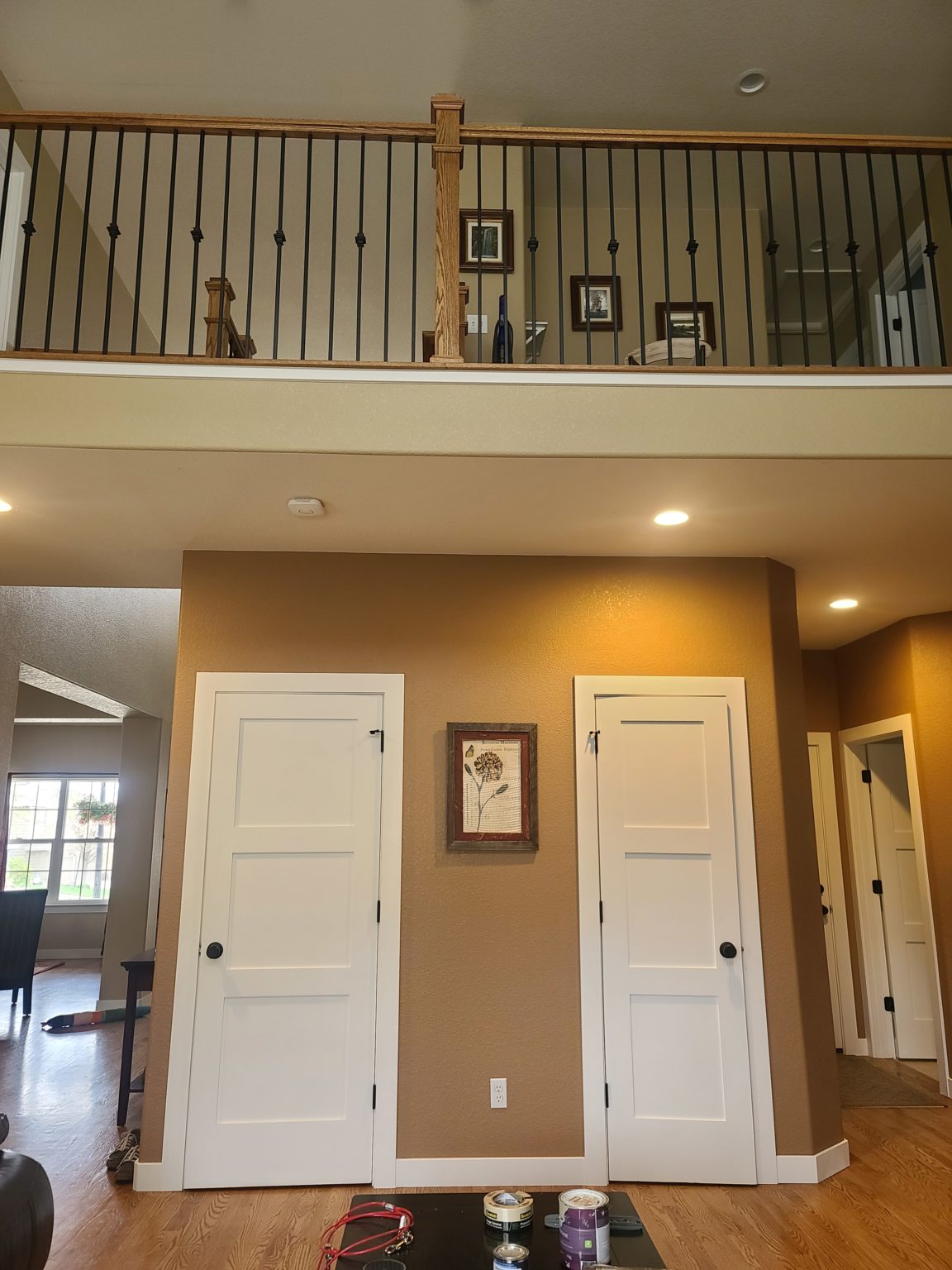
Crown moulding is one of the oldest architectural details in Western design — and for good reason. That simple strip of wood bridging the gap between a wall and ceiling can transform a builder-grade room into something that looks finished, intentional, and elevated. But not all crown moulding is created equal, and slapping it everywhere in your home without a plan is how you end up with a look that feels off.
Here's what we've learned after years of installing crown moulding across Denver Metro homes: proportion, profile, and placement are everything.
Understanding Crown Moulding Profiles
Before we get into which rooms deserve crown, let's talk about the profiles themselves. The shape of the moulding should match the architectural personality of your home.
Cove (Concave) Profile
A simple concave curve. Clean, minimal, and surprisingly versatile. This is our most-recommended profile for modern or transitional homes in Denver's newer builds and ranch-style properties. It reads as "finished" without being fussy.
Ogee (S-Curve) Profile
The classic, traditional crown profile. An S-shaped curve that creates depth and shadow lines. If you have a Victorian, Craftsman bungalow, or classic Tudor in Capitol Hill or Washington Park, ogee profiles with a wider reveal feel right at home.
Flat / Craftsman Profile
A series of flat steps with minimal curves. Inspired by the Arts and Crafts movement. Works beautifully in Craftsman bungalows or mid-century homes where ornate curves would feel out of place.
Built-Up Crown
This is where we stack multiple moulding pieces to create a wide, dramatic cornice. Think grand dining rooms, formal living rooms, or a primary bedroom that needs a statement ceiling. The result is genuinely impressive — but it requires an experienced hand to get the layering and proportions right.
For ceilings under 9 feet, stick to a 3"–4" crown. For 9–10 foot ceilings, 4"–6" feels proportionate. Ceilings above 10 feet can handle 6"+ or built-up crown. Going too large on a low ceiling makes the room feel compressed — a mistake we see in DIY installs all the time.
Room-by-Room: Where Crown Moulding Earns Its Keep
The most visible room in your home. Crown moulding here sets the tone for the entire house. Go for a medium or built-up profile.
Paired with a statement light fixture, crown moulding in the dining room creates a formal, intentional atmosphere that adds real perceived value.
Buyers notice this immediately. A well-appointed primary suite with crown moulding feels like a retreat. Strong ROI for resale.
With remote work the norm, a polished home office with moulding conveys professionalism — both for video calls and for buyers.
Crown on top of upper cabinets (cabinet-to-ceiling) is excellent. Full perimeter crown in an open kitchen can feel awkward if not carried through consistently.
Adds polish, but budget-wise this is the last place to invest if you're working in phases. Match what you do in the primary.
In a small bathroom, crown moulding at a low ceiling compresses the space visually. Simple picture rail or tile accents work better.
These areas won't benefit from the investment. Save your budget for the rooms people actually live in.
What to Expect from Professional Installation
Crown moulding installation looks deceptively simple but is one of the most technically demanding trim jobs in finish carpentry. Every inside corner, outside corner, and ceiling/wall transition requires precise compound angle cuts. Walls are rarely perfectly plumb, and ceilings are rarely perfectly flat — especially in older Denver homes.
Here's what a professional installation includes:
- Wall and ceiling prep: Checking for level and plumb, scribing the moulding if needed.
- Stud finding and proper fastening: Nailing into studs and top plates, not just drywall, ensures the moulding stays put through Colorado's seasonal humidity swings.
- Coping inside corners (not mitering): Coped joints look better and don't open up when wood moves seasonally.
- Filling, sanding, and priming: Before paint, every nail hole and joint is filled, sanded smooth, and primed.
"A mitered inside corner will gap within a year as the wood moves. A coped joint stays tight. It takes longer, but the difference is obvious in ten years."
Crown Moulding in Denver's Climate
Denver's semi-arid climate — with low humidity in winter and monsoon moisture in summer — puts real stress on wood trim. We recommend finger-jointed primed MDF for painted applications. It's dimensionally stable through humidity swings, takes paint beautifully, and is more affordable than solid wood. For stained or natural finish applications, we source kiln-dried solid wood and account for seasonal movement in our installation.
Getting Started
If you're ready to add crown moulding to your Denver home, the best first step is a walkthrough with our team. We'll assess your ceiling heights, architectural style, and existing trim package to recommend the right profile and approach — room by room.