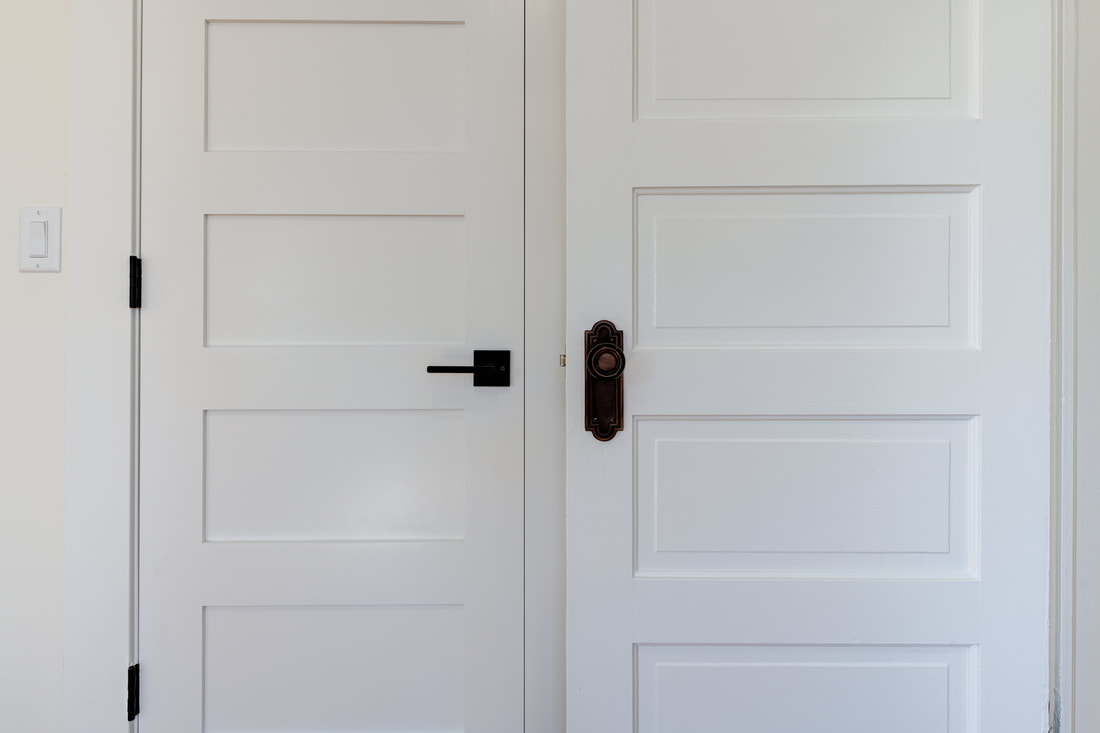
You've just installed beautiful solid-core doors throughout your home. The trim is painted perfectly. And then you notice them — the scratched, tarnished, builder-grade brass knobs that came with the house, still on every door. It's one of the most common finish inconsistencies we see, and one of the most affordable to fix.
Door hardware is the jewelry of your interior. It's touched hundreds of times per day, photographed in every listing, and noticed by every guest. Choosing the right hardware — and keeping it consistent — elevates everything around it. Here's everything you need to know.
Knobs vs. Levers: Which is Right for Your Home?
This is the first decision, and it shapes the entire hardware personality of your home.
- Classic, timeless look
- Works well in traditional, Craftsman, and transitional homes
- Slightly harder to operate with full hands
- Wider range of decorative styles
- Generally less expensive per unit
- Modern, clean aesthetic
- ADA compliant — easier for everyone, including elderly and young children
- Better for high-traffic doors (laundry, pantry)
- More common in contemporary and transitional homes
- Tends to read as more upscale to buyers
Our recommendation for most Denver Metro homes built in the last 20 years: levers. They read as modern, they're practical, and they photograph well. If you have a Victorian, Craftsman bungalow, or traditional colonial, knobs can feel more authentic — but even then, square-backplate levers often bridge traditional and modern beautifully.
"The biggest mistake homeowners make is mixing hardware styles in the same home — brushed nickel in the hallway, oil-rubbed bronze in the bathroom, polished chrome in the kitchen. Pick one metal family and commit to it everywhere."
Choosing a Finish: The Most Important Decision
Hardware finish is not just aesthetic — it needs to be considered alongside your light fixtures, plumbing fixtures, cabinet pulls, and appliances for a cohesive home. Here are the finishes we work with most in Denver homes:
The safe, universal choice. Works with almost any interior. Hides fingerprints well. Pairs with stainless appliances naturally.
The current design darling. Dramatic against white doors, pairs beautifully with black window frames. Requires commitment — use it everywhere.
Having a major resurgence. Warm, luxurious, and pairs well with warm-toned interiors and natural wood accents. Not for every home.
Warm, traditional, and earthy. Works well in homes with darker wood tones, leather furniture, and Arts and Crafts styling.
Bright, clean, and crisp. Works in modern/minimalist homes. Shows fingerprints more than brushed finishes — best in low-touch areas.
Understanding Hinge Types & Why They Matter
Hinges are the hardware that actually does the work, and they're often completely overlooked. Most standard interior doors use 3.5" x 3.5" butt hinges with two hinges per door. For solid-core doors, we always install three hinges — the added weight requires it for long-term performance.
Ball-Bearing vs. Plain Bearing
Ball-bearing hinges have small ball bearings between the knuckles, reducing friction and lasting far longer under heavy use. For interior doors in busy areas — entry from garage, laundry rooms, kids' rooms — ball-bearing hinges are worth the modest extra cost. For closets and light-use doors, plain-bearing hinges are fine.
Square vs. Rounded Corners
This is a detail that has to match your door's mortise (the cutout in the door edge). Most American doors use 5/8" radius rounded corners. If you're replacing hinges on an existing door, match the existing hinge exactly or you'll end up with visible corner gaps. It's a small thing that looks terrible.
Match Your Hinge Finish to Your Hardware
Hinges are visible every time a door swings open. If you're installing matte black levers, use matte black hinges. If you're using satin nickel knobs, use satin nickel hinges. Mixing finish on hinges and hardware is the sign of a rushed installation.
Latch and Lock Types for Interior Doors
Interior door hardware comes in three basic latch configurations, and choosing the right one matters:
- Passage (No Lock): For hallways, closets, and rooms that don't need privacy. The latch clicks without turning.
- Privacy (Push-Button Lock): For bedrooms and bathrooms. Locks from inside with a push button or twist, and has an emergency override pin on the exterior.
- Dummy (No Latch): For closet doors that are always visible and don't need to latch. Decorative only — just the knob or lever with no mechanism.
Backset: The Measurement Nobody Thinks About
Backset is the distance from the edge of the door to the center of the bore hole — either 2-3/8" or 2-3/4". Most interior hardware comes adjustable to fit both, but before you order, measure your existing holes. A mismatched backset means the latch won't align with the strike plate, and the door won't close properly.
Hardware Throughout the Home: Creating Consistency
The goal is a cohesive "metal story" — one finish family, one style aesthetic (traditional vs. modern), applied consistently. Here's a practical framework:
- Choose your finish first. Pick it based on your existing light fixtures and plumbing fixtures. If your lights are matte black, go matte black throughout. If they're satin nickel, follow suit.
- Choose lever vs. knob based on your architectural style. When in doubt, levers.
- Decide on one profile family. Square backplates and straight lever arms for modern homes. Round backplates and curved levers for traditional.
- Buy from one manufacturer. Mixing brands in the same finish can result in subtle color differences that are obvious in natural light.
- Don't forget the hinges. Order matching hinges at the same time.
When to Call a Professional
Replacing existing hardware with the same backset and bore size is a DIY-friendly project. But if you're also upgrading to new doors, or if your existing bore holes are in the wrong position or damaged, that's where a professional installation makes sense. We regularly bundle door hardware replacement with our door installation projects — it's efficient and ensures everything is installed level, aligned, and performing correctly from day one.